What Is PRP for Hair Loss?
PRP (Platelet-Rich Plasma) therapy is a regenerative treatment that uses a concentrated portion of your own blood to stimulate hair follicles and promote hair growth.
The process involves:
Drawing a small amount of your blood
Placing it in a centrifuge to separate the platelet-rich plasma
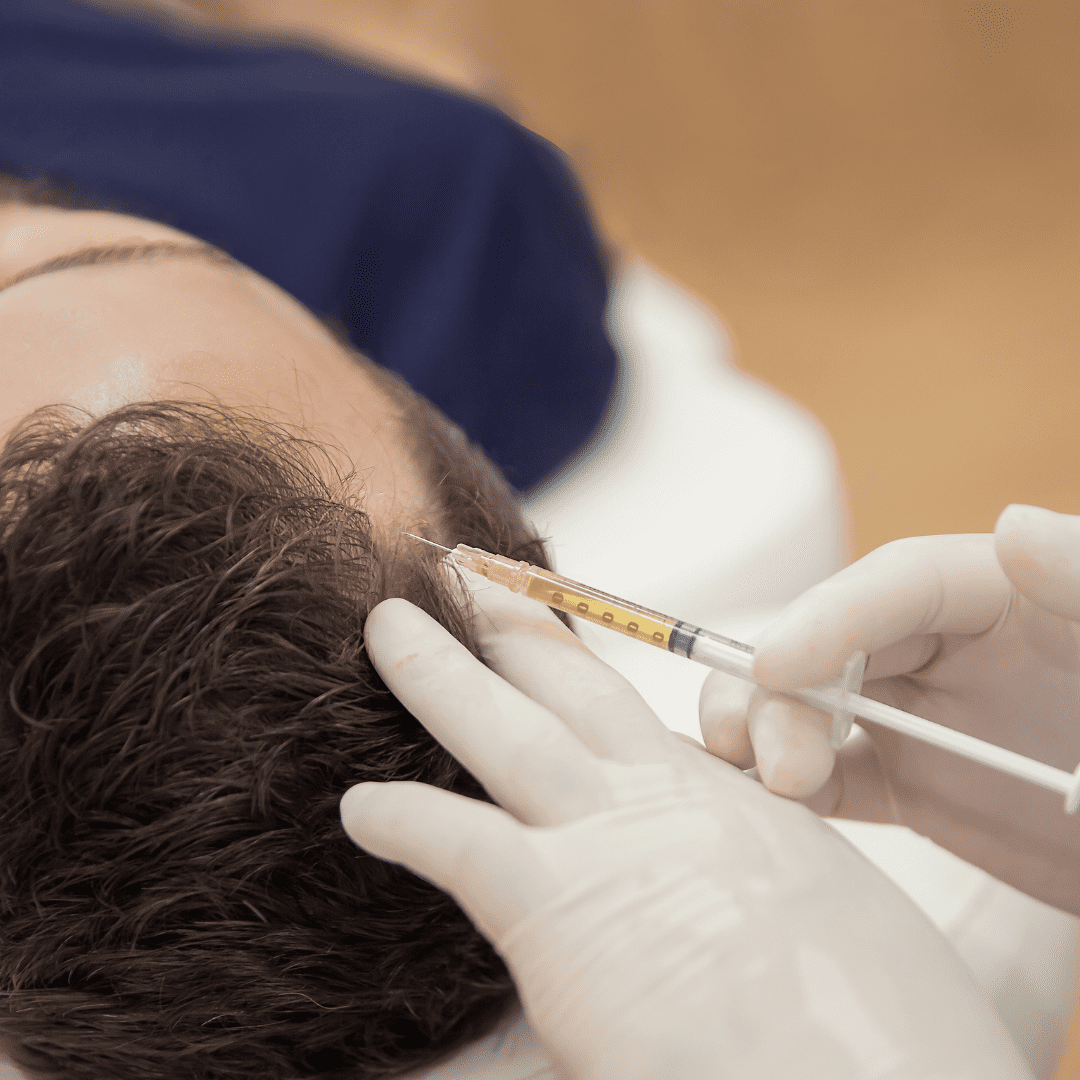
Injecting the PRP directly into areas of the scalp with thinning hair
Platelets contain powerful growth factors that help:
Stimulate inactive hair follicles
Improve blood supply to the scalp
Strengthen existing hair
Increase hair thickness and density
Because PRP uses your own blood, the treatment is natural and low-risk.
How Does PRP Help with Hair Loss?
Hair loss often occurs when hair follicles shrink and enter a resting phase. PRP works by “waking up” dormant follicles and extending the growth phase of the hair cycle.
It is commonly used to treat:
Male pattern baldness (androgenetic alopecia)
Female pattern hair thinning
Postpartum hair loss
Stress-related hair shedding
Early-stage hair thinning
PRP is most effective in individuals who still have active hair follicles in the affected areas.
What to Expect During the Procedure Consultation
Your provider will assess:
Type of hair loss
Scalp condition
Medical history
Treatment goals
During the Session
Blood is drawn from your arm
The sample is processed in a centrifuge
PRP is injected into targeted scalp areas
The procedure typically takes about 45–60 minutes.
After the Treatment
How Many Sessions Are Needed?
For optimal results, most patients require:
Hair growth is gradual. Visible improvement usually begins after 2–3 months, with fuller results appearing around 6 months.
Benefits of PRP for Hair Loss
- Non-surgical and minimally invasive
- Uses your body’s natural healing process
- Minimal downtime
- Safe and well-tolerated
- Improves hair thickness and strength
- Can be combined with other hair treatments
PRP is an excellent option for patients who want a natural alternative to medications or hair transplant surgery.
Is PRP Safe?
Yes, PRP is generally considered safe because it uses your own blood, reducing the risk of allergic reactions or rejection.
However, it should always be performed by a trained medical professional to ensure proper technique and safety.
PRP may not be recommended for individuals with:
A professional consultation is essential.
Who Is a Good Candidate?
PRP works best for individuals who:
Are in the early stages of hair thinning
Have mild to moderate hair loss
Want a natural, non-surgical treatment
Are looking to improve hair density and quality
Those with complete baldness or long-standing inactive follicles may not see significant results.
PRP vs. Hair Transplant: What’s the Difference?
| PRP Therapy | Hair Transplant |
|---|
| Non-surgical | Surgical procedure |
| Minimal downtime | Recovery period required |
| Gradual results | Immediate graft placement |
| Stimulates natural growth | Relocates hair follicles |
In some cases, PRP is even used to enhance the results of hair transplant procedures.
Aftercare Tips
To maximize results:
Avoid washing hair for 24 hours
Avoid alcohol and smoking for a few days
Limit heavy exercise for 24 hours
Follow your provider’s instructions carefully
Consistency and proper scalp care are key to maintaining results.